The Order
How Vanilla RNG is tweaked for the competitive ruleset.
Introduction
The Order is a feature integrated into the Balatro Multiplayer mod designed to create a fair, competitive ruleset. Its main goal is to give both players access to the same shared resources and reduce RNG, allowing the better player to win more often.
Instead of relying on vanilla mechanics, where you'll never be able to get what's inside a 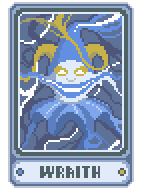 WraithCreates a randomRare Joker,sets money to $0spectral · $4 or
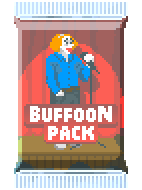 Buffoon PackChoose 1 of up to2 Joker cardsbooster · $4 once skipped, The Order organizes game elements into shared queues. This ensures that no matter when or how a player accesses a queue, both players eventually have access to the exact same jokers/spectrals/tarots etc.
This article will explain how important RNG effects work with The Order enabled.
Disclaimer
Not everything described below is necessarily different from Vanilla. Some mechanics are not touched by The Order, but deemed important enough to require an explanation on how they work.
How queues work
A queue is a fixed list of results that the game works through in order. Each time something uses a queue, it takes the next result, so you and your opponent see the same results in the same order, no matter when you get to them. Most queues last the whole game; a few start over every ante or every PVP Blind.
Every queue is unique to the seed you're playing on, and thus shared with your opponent.
Shop
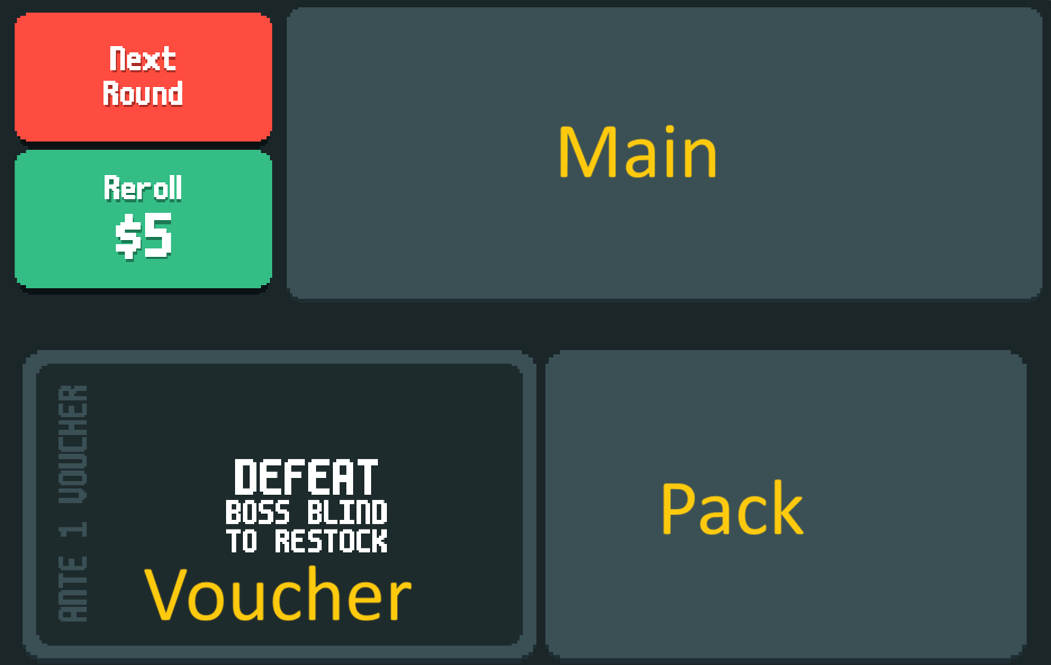
The shop has 3 areas.
Main area
The main shop has a game-long queue of random numbers ranging between 0 and 1. To determine what ends up in a slot, we compare the rolled number to the band of odds. Without any vouchers (and no ghost deck) you get:
| Joker | Tarot | Planet |
|---|---|---|
| 0 ... 0.714 | 0.715 ... 0.857 | 0.858 ... 1 |
So if the number is 0.5, that falls under the 'joker' range and that slot gets a joker.
This tool allows you to see the shop slot spawn chances/ranges for any combo of vouchers.
Shop slot odds
Vouchers
Each shop slot
Whenever a slot is assigned a joker, it takes a joker from either the common, uncommon or rare joker queue. The rarity is decided based on a game-long queue, shared by the shop and buffoon packs.
Voucher Area
 Reroll SurplusRerolls cost$2 lessvoucher · $10Grabber
 GrabberPermanentlygain +1 handper roundvoucher · $10Blank
 BlankDoes nothing?voucher · $10
The Voucher queue is a game long queue of numbers from 1 to 16. Despite there being 32 Vouchers, the Voucher queue is only 1 to 16.
The game long Voucher queue operates as follows: The Voucher queue attempts to spawn a Tier 1 Voucher depending on the number rolled. If that Tier 1 has already been purchased, the appropriate Tier 2 Voucher will be spawned.
If neither Voucher is available (Meaning you already have both the Tier 1 and 2), it will simply progress to the next Voucher in the queue and repeats this whole process.
If you double skip ante 1, the voucher queue will still advance, even though you didn't see a shop that ante.
 Voucher TagAdds one Voucherto the next shoptag advance the Voucher queue.
They do this in the same manner that progressing the Voucher queue naturally does.
Voucher Skip tech
The Voucher TagAdds one Voucherto the next shoptag will not be able to spawn the Tier 2 version of a Tier 1 voucher thats already in the shop. However, slowing down animations and buying a Tier 1 voucher before the Voucher TagAdds one Voucherto the next shoptag triggers and spawns a 2nd voucher, allows the new voucher from the Voucher TagAdds one Voucherto the next shoptag to be the Tier 2 version of that same type.
This allows you for example to buy BlankDoes nothing?voucher · $10 and  Antimatter+1 Joker Slotvoucher · $10 in the same shop if you are lucky.
Pack Area
There's a game-long queue of packs, with the first pack being a guaranteed Buffoon PackChoose 1 of up to2 Joker cardsbooster · $4.
Every time you enter a shop, the pack queue advances by 2. Taking a skip does not advance this queue.
What's inside each pack is covered here:
- Buffoon Packs under Jokers,
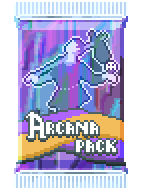 Arcana PackChoose 1 of up to3 Tarot cards tobe used immediatelybooster · $4,
 Celestial PackChoose 1 of up to3 Planet cards tobe used immediatelybooster · $4 and
 Spectral PackChoose 1 of up to2 Spectral cards tobe used immediatelybooster · $4 under Consumables
 Standard PackChoose 1 of up to3 Playing cards toadd to your deckbooster · $4 under Playing cards.
Blocking
What happens if I block something?
If you block something from appearing in the shop, it skips the blocked item, and reveals the next item of the respective queue.
Similar logic to Blocking applies to Planets we have not unlocked. Say we roll into the next planet in the queue is  Eris(lvl.1) Level upFlush Five+3 Mult and+50 chipsplanet · $3, but we have not yet unlocked that hand. The Planet queue will skip over it, and we will move to the next Planet in queue. This repeats until we get an unlocked planet card that is not being blocked.
Jokers
 Joker+4 Multcommon · $2Mime
 MimeRetrigger allcard held inhand abilitiesuncommon · $5Blueprint
 BlueprintCopies ability ofJoker to the rightrare · $10
There is a game-long queue of jokers for each rarity.
To reduce variance, some mechanics that give you random jokers will not give you stickered jokers on  Black StakeShop can have Eternal Jokers(Can't be sold or destroyed)Applies all previous Stakesstake and above. Instead it will look ahead in the queue and give you the next stickerless joker. This does not advance the queue, any stickered jokers you might have skipped over will remain next in queue.
Buffoon Packs
Buffoon packs draw from the joker queues exactly like the shop does: for every joker in the pack, it takes a joker from either the common, uncommon or rare joker queue. The rarity is decided based on a game-long queue, shared by the shop and buffoon packs.
Skips
The uncommon/rare joker created by the  Uncommon TagShop has a freeUncommon Jokertag/
 Rare TagShop has a freeRare Jokertag is the next joker in the uncommon/rare joker queue.
The  Top-up TagCreate up to 2Common Jokers(Must have room)tag gives you the next 2 stickerless jokers from the common joker queue.
Wraith
WraithCreates a randomRare Joker,sets money to $0spectral · $4 gives the next stickerless joker in the rare joker queue
Judgement
On Black StakeShop can have Eternal Jokers(Can't be sold or destroyed)Applies all previous Stakesstake and above,  JudgementCreates a randomJoker card(Must have room)tarot · $3 has a queue of rarities. 70% common, 25% uncommon, 5% rare. JudgementCreates a randomJoker card(Must have room)tarot · $3 will give the next stickerless joker of the rarity next in queue.
Below Black StakeShop can have Eternal Jokers(Can't be sold or destroyed)Applies all previous Stakesstake, JudgementCreates a randomJoker card(Must have room)tarot · $3 gives the next joker that would appear in shop, no matter the rarity.
Riff Raff
 Riff-RaffWhen Blind is selected,create 2 Common Jokers(Must have room)common · $6 gives you the next 2 stickerless jokers from the common joker queue on blind select.
Consumables
 The EmperorCreates up to 2random Tarot cards(Must have room)tarot · $3Pluto
 Pluto(lvl.1) Level upHigh Card+1 Mult and+10 chipsplanet · $3Ectoplasm
 EctoplasmAdd Negative toa random Joker,-1 hand sizespectral · $4
All consumable types have 2 separate queues:
-
Shop Queue
Consumables you find and purchase in the main shop section. On Ghost DeckSpectral cards mayappear in the shop,start with a Hex carddeck this includes Spectral cards.
Consumable generators (i.e. Purple SealCreates a Tarot cardwhen discarded(Must have room)seal,
 VagabondCreate a Tarot cardif hand is playedwith $4 or lessrare · $8,
 Sixth SenseIf first hand of round isa single 6, destroy it andcreate a Spectral card(Must have room)uncommon · $6, The EmperorCreates up to 2random Tarot cards(Must have room)tarot · $3,
 The High PriestessCreates up to 2random Planet cards(Must have room)tarot · $3) all take from the Shop Queue of the consumable type they generate.
-
In-Pack Queue
Consumables you find in packs (i.e.Arcana PackChoose 1 of up to3 Tarot cards tobe used immediatelybooster · $4,  Celestial PackChoose 1 of up to3 Planet cards tobe used immediatelybooster · $4, Spectral PackChoose 1 of up to2 Spectral cards tobe used immediatelybooster · $4) draw from a separate In-Pack Queue when opened. (Not opening a pack will not advance the queue)
When you have Omen GlobeSpectral cards mayappear in any ofthe Arcana Packsvoucher · $10, Spectral cards appearing in Arcana PackChoose 1 of up to3 Tarot cards tobe used immediatelybooster · $4 take from the In-Pack Spectral Card Queue
The Soul & Black Hole
 The SoulCreates aLegendary Joker(Must have room)spectral · $4Black Hole
 Black HoleUpgrade everypoker handby 1 levelspectral · $4
These consumables are slightly different.
The SoulCreates aLegendary Joker(Must have room)spectral · $4 has a single game long queue of misses and the very few hits. Every time you open a Arcana PackChoose 1 of up to3 Tarot cards tobe used immediatelybooster · $4 or Spectral PackChoose 1 of up to2 Spectral cards tobe used immediatelybooster · $4 pack, each Consumable created in the pack triggers The Soul queue. If the queue returns a hit, the Consumable In-Pack Queue is pushed back 1, and The Soul is inserted
The same applies for Black HoleUpgrade everypoker handby 1 levelspectral · $4, except its queue advances on opening Celestial PackChoose 1 of up to3 Planet cards tobe used immediatelybooster · $4 and  Spectral PackChoose 1 of up to2 Spectral cards tobe used immediatelybooster · $4.
Playing cards
Standard Packs & Playing Cards
There are 3 unique queues of playing cards
- Cards in Standard PackChoose 1 of up to3 Playing cards toadd to your deckbooster · $4
- Cards from
 Magic TrickPlaying cards canbe purchasedfrom the shopvoucher · $10
- Enhanced cards from
 IllusionPlaying cards in shopmay have an Enhancement,Edition, and/or a Sealvoucher · $10
Drawing Order
The drawing order is fixed for every blind based on the seed just like vanilla. There is 1 exception when you skip the Small Blind and play the Big Blind. Instead of getting the 'Big Blind draws' you get the draws you would have had in the Small Blind. This is done to synchronise value generated between you and your opponent (think of  DNAIf first hand of roundhas only 1 card, add apermanent copy to deckand draw it to handrare · $8, Purple SealCreates a Tarot cardwhen discarded(Must have room)seal,
 Mail-In RebateEarn $5 for eachdiscarded ?, rankchanges every roundcommon · $4)
Glass
 Glass CardX2 Mult1 in 4 chance todestroy cardenhancement
Glass breaks are on a game long queue. It advances every time a glass card is played (for every glass card in the played hand).
Say the queue reads: Ok - Break - Break - OK - OK - ...

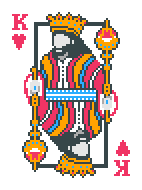

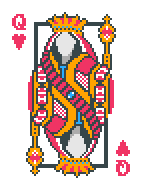
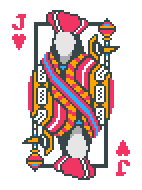
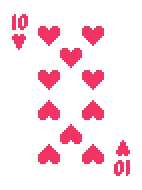
Playing this hand would cause the King and Jack to break.
If we had rearranged the hand to this however:
The 10 and Ace would break.
Luckies
 Lucky Card1 in 5 chancefor +20 Mult1 in 15 chanceto win $20enhancement
There are 2 queues, both of which are gamelong.
- 1/5 mult queue
- 1/15 money queue
both advance every time a lucky card is triggered.
This is the same way Lucky cards work in Vanilla.
Joker Changes
These jokers have chances or targets of their own. Some work differently with The Order.
The Idol
 The IdolEach played ?of ? givesX2 Mult when scoredCard changes every rounduncommon · $6
The Idol picks a new target card (rank and suit) at the end of every round.
Every card in your deck has an equal chance of being picked, so a rank and suit with more copies is more likely. If you have 4 King of Spades in a 50-card deck, King of Spades has a 4/50 = 8% chance.
The Order changes the order the cards are lined up in before the roll.
The IdolEach played ?of ? givesX2 Mult when scoredCard changes every rounduncommon · $6 has a queue of random numbers between 0 and 1. Each ante has its own queue, and every round you finish uses the next number in it. Your cards are grouped by rank and suit and lined up from 0 to 1. Each group gets a slice as big as its share of your deck, and the group whose slice contains the rolled number becomes the target.
In Vanilla, the cards are lined up in the order they were added to your deck.
With The Order, groups are sorted by how good an Idol target they are, so similar decks line up in a similar order. Since you and your opponent share the queue, similar decks usually get the same or a similar target.
Example
Say your deck consists of these 10 cards:
Deck 10 cards
| Card | Copies |
|---|---|
| K♠ | 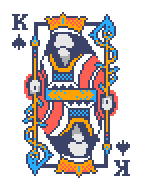 |
| 7♥ | 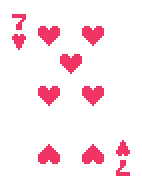 |
| A♦ |  |
| 3♣ |  |
None of them reach 5 copies, so they're sorted mostly by count:
| King of Spades | 7 of Hearts | Ace of Diamonds | 3 of Clubs |
|---|---|---|---|
| 0 … 0.40 | 0.40 … 0.70 | 0.70 … 0.90 | 0.90 … 1 |
The queue rolls 0.55, so your target is 7 of Hearts.
Your opponent's deck is slightly different:
Deck 10 cards
| Card | Copies |
|---|---|
| K♠ | |
| 7♥ | |
| 3♣ | |
| A♦ | |
| King of Spades | 7 of Hearts | 3 of Clubs | Ace of Diamonds |
|---|---|---|---|
| 0 … 0.40 | 0.40 … 0.70 | 0.70 … 0.90 | 0.90 … 1 |
Same roll (0.55), same target: 7 of Hearts.
How groups are sorted
Groups with 5 or more copies (A tier) always go first. Wild Cards of the same rank count as copies for every suit. Among themselves, these groups are sorted by:
- the number of copies
- quality bonuses (see below)
All other groups (B tier) come after. They're sorted by how easy they would be to bring up to 5 copies:
- copies you already have
- cards of the same rank in other suits that a
 The SunConverts up to3 selected cardsto Heartstarot · $3 could convert (up to 3)
- cards one rank lower in the same suit (
 StrengthIncreases rank ofup to 2 selectedcards by 1tarot · $3) (up to 2)
- quality bonuses
Quality bonuses:
-
 Red SealRetrigger thiscard 1 timeseal
 MP StandardGlass CardX1.5 Mult1 in 4 chance todestroy cardenhancement, Polychrome, Foil, Holo, Lucky Card1 in 5 chancefor +20 Mult1 in 15 chanceto win $20enhancement,
 Bonus Cardenhancement,
 Mult Card+4 Multenhancement
- face cards, if your deck has more of them than average
- ranks 2–5, if your deck has more of them than average
 Steel CardX1.5 Multwhile this cardstays in handenhancement,
 Gold Card$3 if thiscard is held in handat end of roundenhancement,
 Wild CardCan be usedas any suitenhancement,
 Blue SealCreates the Planet cardfor final played poker handof round if held in hand(Must have room)seal, Purple SealCreates a Tarot cardwhen discarded(Must have room)seal and
 Gold SealEarn $3 when thiscard is playedand scoresseal give no bonus.
If two groups score exactly the same, the higher rank goes first, then the suit.
Calculate the weights
Want to know exactly what the weights are for a hit in your deck and how it's calculated? You can use this tool:
Build your deck below to see how each hit is weighted with The Idol sorting algorithm part of The Order.
A tier hits are hits with 5+ copies (wilds of the same rank are counted as a copy) B tier hits are hits that don't qualify for A tier.
A tier hits are always sorted before B tier hits.
Add cards
Click or drag a card into your deck.
Values the weights use
Bonus per card
- Red Seal+1
- Polychrome+0.5
- Holographic+0.25
- Foil+0.25
- Glass Card+0.5
- Lucky Card+0.01
- Bonus Card+0.01
- Mult Card+0.01
- Anything else: 0. Counted in full in tier A, ×0.5 in tier B.
Copies and potential
- Tier A: per copy+1
- Tier B: per copy+2
- Tier B: per off-suit copy (max 3)+0.8
- Tier B: per card one rank below (max 2)+0.7
- Per 2–5 card over the expected+0.05
- Per face card over the expected+0.055
- Wild cards count as a copy in every suit. 5 or more copies make tier A.
Your deck 0 cards
Drop cards here, click them above, or start from a preset.
Credit to the creator of the sorting algorithm: 12problems
Bloodstone
 MP StandardBloodstone1 in 2 chance forplayed cards withHeart suit to giveX1.5 Mult when scoreduncommon · $7BalancedBalancedThis card has been rebalanced
Bloodstone has 2 queues.
- A game-long queue of hits & misses, advancing every time you trigger a Heart suited card in a Small/Big/Boss Blind
- A queue of hits & misses unique to each PVP Blind, advancing every time you trigger a Heart suited card, but repeating every hand you play.
Simply put, in the PVP Blind, MP StandardBloodstone1 in 2 chance forplayed cards withHeart suit to giveX1.5 Mult when scoreduncommon · $7BalancedBalancedThis card has been rebalanced will give the same score increase every hand you play (provided all trigger the same amount of Heart suited cards).
Now if you and your opponent both have MP StandardBloodstone1 in 2 chance forplayed cards withHeart suit to giveX1.5 Mult when scoreduncommon · $7BalancedBalancedThis card has been rebalanced, the PVP won't be decided by its RNG, since it will provide both players with the same score increase.
Copies and Retriggers
The queue is advanced by MP StandardBloodstone1 in 2 chance forplayed cards withHeart suit to giveX1.5 Mult when scoreduncommon · $7BalancedBalancedThis card has been rebalanced triggers. Meaning a simple flush with BlueprintCopies ability ofJoker to the rightrare · $10BalancedBalancedThis card has been rebalanced & MP StandardBloodstone1 in 2 chance forplayed cards withHeart suit to giveX1.5 Mult when scoreduncommon · $7BalancedBalancedThis card has been rebalanced will give the same xmult as an active  DuskRetrigger all playedcards in finalhand of rounduncommon · $5BalancedBalancedThis card has been rebalanced & MP StandardBloodstone1 in 2 chance forplayed cards withHeart suit to giveX1.5 Mult when scoreduncommon · $7BalancedBalancedThis card has been rebalanced; both totalling 10 triggers.
Scouting Bloodstone
In the PVP, playing a throwaway hand can allow you to 'scout' how often the MP StandardBloodstone1 in 2 chance forplayed cards withHeart suit to giveX1.5 Mult when scoreduncommon · $7BalancedBalancedThis card has been rebalanced will trigger for future hands. This can be helpful to calculate score or determine the superior copy target for  BrainstormCopies the abilityof leftmost Jokerrare · $10 / BlueprintCopies ability ofJoker to the rightrare · $10
Invisible Joker (and other joker targeting)
 Invisible JokerAfter 2 rounds,sell this card toDuplicate a random Joker(Currently ?/2)rare · $8
In Vanilla, Invisible JokerAfter 2 rounds,sell this card toDuplicate a random Joker(Currently ?/2)rare · $8's copy target is decided by ordering your jokers by when they were obtained (oldest first), and then picking a random one. This means that both obtaining order and the total amount of jokers in slot will influence the result.
Everything explained below works exactly the same for other randomized joker targeting mechanics like:  AnkhCreate a copy of arandom Joker, destroyall other Jokersspectral · $4,
 HexAdd Polychrome to arandom Joker, destroyall other Jokersspectral · $4 and
 The Wheel of Fortune1 in 4 chance to addFoil, Holographic, orPolychrome editionto a random Jokertarot · $3.
 MadnessWhen Small Blind or Big Blindis selected, gain X0.5 Multand destroy a random Joker(Currently X1 Mult)uncommon · $7 also selects its target the same way, but ignores jokers with the Eternal sticker.
With The Order enabled, your jokers are first grouped by ID, meaning only copies of the same joker share a group. Jokers in the same group are ordered oldest-first. Then each joker in a group rolls a number between 0 and 1. Invisible joker will select the joker with the highest number as its copy target.
Example: Say you have the following joker lineup:
 DuskRetrigger all playedcards in finalhand of rounduncommon · $5EternalEternalCan't be soldor destroyedDuskDuskRetrigger all playedcards in finalhand of rounduncommon · $5Oops! All 6s
 Oops! All 6sDoubles all listedprobabilities(ex: 1 in 3 -> 2 in 3)uncommon · $4Lucky Cat
 Lucky CatThis Joker gains X0.25 Multevery time a Lucky cardsuccessfully triggers(Currently X1 Mult)uncommon · $6
We'll assume we acquired the Eternal Dusk before the regular Dusk.
Every joker is grouped by type, resulting in 3 groups:
- The DuskRetrigger all playedcards in finalhand of rounduncommon · $5EternalEternalCan't be soldor destroyed and DuskRetrigger all playedcards in finalhand of rounduncommon · $5
-
Oops! All 6sDoubles all listedprobabilities(ex: 1 in 3 -> 2 in 3)uncommon · $4
-
Lucky CatThis Joker gains X0.25 Multevery time a Lucky cardsuccessfully triggers(Currently X1 Mult)uncommon · $6
Now each type has its own RNG stream. Let's say it's the following:
| Joker type | 1st | 2nd | 3rd |
|---|---|---|---|
| DuskRetrigger all playedcards in finalhand of rounduncommon · $5 | 0.40 | 0.80 | 0.20 |
| Oops! All 6sDoubles all listedprobabilities(ex: 1 in 3 -> 2 in 3)uncommon · $4 | 0.10 | 0.90 | 0.15 |
| Lucky CatThis Joker gains X0.25 Multevery time a Lucky cardsuccessfully triggers(Currently X1 Mult)uncommon · $6 | 0.30 | 0.85 | 0.35 |
 Hanging ChadRetrigger first playedcard used in scoring2 additional timescommon · $4 | 0.95 | 0.25 | 0.55 |
Each of our jokers get the following score:
| DuskRetrigger all playedcards in finalhand of rounduncommon · $5EternalEternalCan't be soldor destroyed | DuskRetrigger all playedcards in finalhand of rounduncommon · $5 | Oops! All 6sDoubles all listedprobabilities(ex: 1 in 3 -> 2 in 3)uncommon · $4 | Lucky CatThis Joker gains X0.25 Multevery time a Lucky cardsuccessfully triggers(Currently X1 Mult)uncommon · $6 |
|---|---|---|---|
| 0.40 | 0.80 | 0.10 | 0.30 |
DuskRetrigger all playedcards in finalhand of rounduncommon · $5 has the highest score: 0.80, and would be selected as the copy target by Invisible JokerAfter 2 rounds,sell this card toDuplicate a random Joker(Currently ?/2)rare · $8. If we were to add a Hanging ChadRetrigger first playedcard used in scoring2 additional timescommon · $4, it would be selected instead, as it has an even higher score: 0.95.
The RNG streams are unique to every joker selection mechanic, (Invisible JokerAfter 2 rounds,sell this card toDuplicate a random Joker(Currently ?/2)rare · $8, AnkhCreate a copy of arandom Joker, destroyall other Jokersspectral · $4, HexAdd Polychrome to arandom Joker, destroyall other Jokersspectral · $4, The Wheel of Fortune1 in 4 chance to addFoil, Holographic, orPolychrome editionto a random Jokertarot · $3, MadnessWhen Small Blind or Big Blindis selected, gain X0.5 Multand destroy a random Joker(Currently X1 Mult)uncommon · $7) and will be different for consecutive activations of the same type (i.e. each invisible joker activation will have different RNG from the previous).
Oops all 6's
Oops! All 6sDoubles all listedprobabilities(ex: 1 in 3 -> 2 in 3)uncommon · $4Random Jokers in Balatro generate a number between 0-1, and successfully proc if the generated number is less than or equal to the odd of the Joker hitting (0.25 for  8 Ball1 in 4 chance for eachplayed 8 to create aTarot card when scored(Must have room)common · $5, 0.5 for
 Hallucination1 in 2 chance to createa Tarot card when anyBooster Pack is opened(Must have room)common · $4, etc).
Oops! All 6sDoubles all listedprobabilities(ex: 1 in 3 -> 2 in 3)uncommon · $4 doubles the number that must be rolled less than (0.25 -> 0.5 for 8-Ball, 0.5 -> 1 for Hallucination). It does not cause a reroll.
Simply, Oops! All 6sDoubles all listedprobabilities(ex: 1 in 3 -> 2 in 3)uncommon · $4 can turn a miss into a hit, but never a hit into a miss.
This is the same way it works in Vanilla.
Credit
This was created in part using information in this document made by SurCats. While some things are outdated or missing in this document, the majority of information still holds and was reused here.